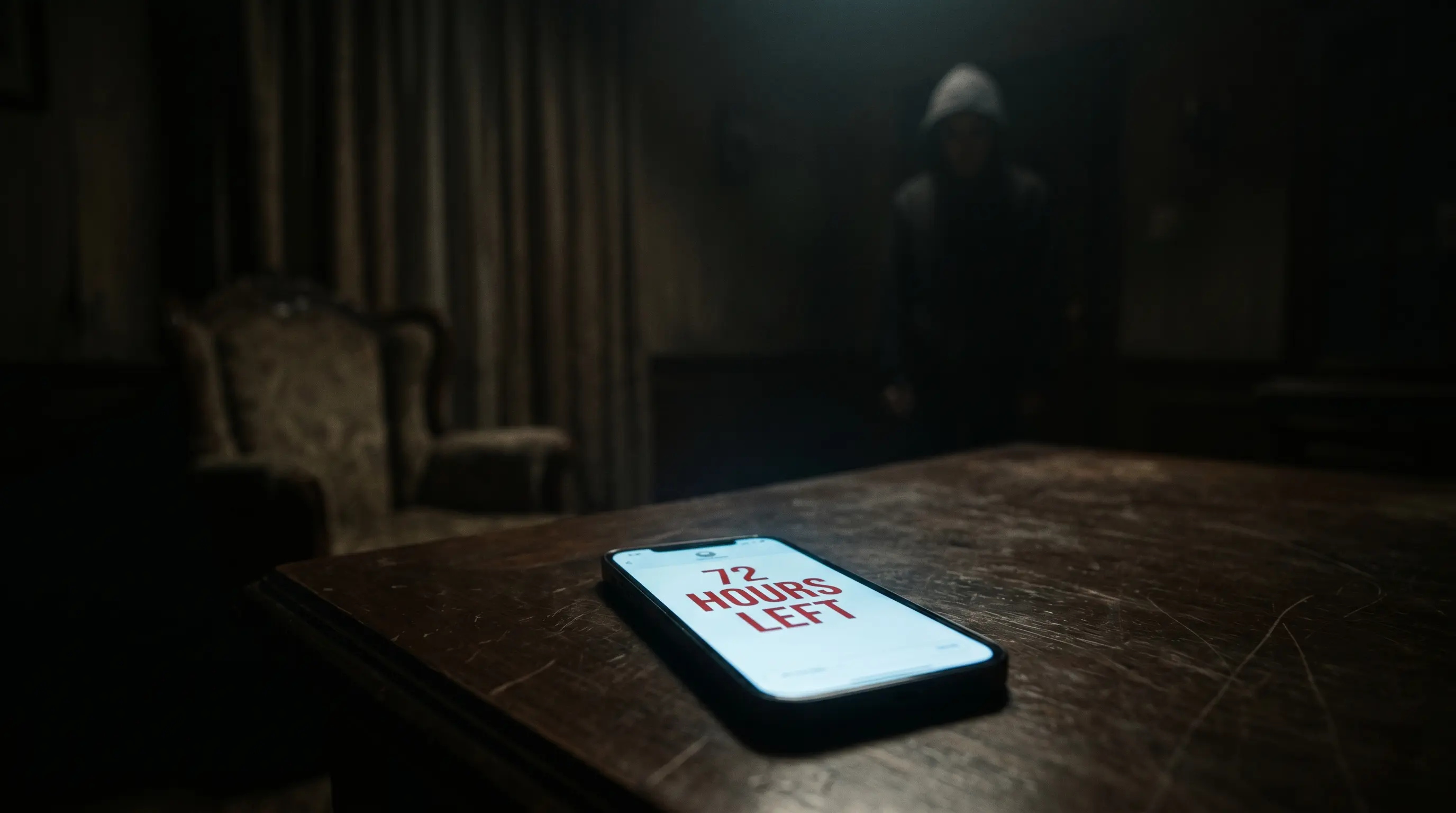
Some crimes don't start when the victim dies. They start when the phone lights up.
Not hours before the murder. Not days. Sometimes, everything begins with a single line of text. A few words on a glowing screen. At first, they mean nothing. A sick joke. A scam. Spam. But once a body is found, the message becomes the most important piece of evidence in the entire case.
The truly terrifying part? In some files, the message arrived minutes before death. In others, the same message was sent to several people— and every single person who received it died shortly after.
The police called it coincidence. Families called it threats. But after the truth came out… even the lead investigators admitted they had never seen anything like it.
This is one of those cases. A case that began with a vague, anonymous message— and ended with an entire city living in fear of a notification sound.
Adham: The First Message
2018 – a small city, the kind of place where nothing truly bad ever happens. Adham, 27. Office worker. No enemies, no debts, no criminal record. The kind of man who could disappear and only his family would notice.
Friday night, he was at home watching a football match. Empty coffee cup on the table, half-eaten chips on the couch. The game was boring; his life even more so. At 10:41 p.m., his phone buzzed. Unknown number. He unlocked the screen lazily. "One new message."
"72 HOURS LEFT."
Adham snorted. He typed back: "Who is this?" No reply. He waited. Nothing came. No typing dots, no second message. Eventually he rolled his eyes, locked the phone, and went back to the match.
48 Hours
The next morning, his alarm dragged him out of bed. He checked his notifications. Another message, received at 7:02 a.m.
"48 HOURS LEFT."
He stared at it a little longer this time. Still the same unknown number. He tried calling it. The call didn't ring. The line didn't even connect. It just… failed.
He sent three texts in a row. "Is this a joke?" "Who are you?" "What do you want?" No answer. It was as if the number only existed for a few seconds every time it sent a message, then fell off the edge of the network.
He told his friends over coffee. They laughed, slapped his shoulder, made jokes about chain messages and horror movies. He laughed too, because what else could he do?
24 Hours
Then the third message came.
"24 HOURS LEFT."
This one landed while he was at work. This time, it wasn't funny. Because whoever was sending the texts clearly knew his routine. The message arrived exactly when he usually checked his phone during his break. When he called the number, he watched the screen for almost a full minute. "Call failed."
Look Behind You
That night, he left his office late. The streets were almost empty, the kind of silence only concrete can hold. At 11:00 p.m., he turned into the narrow road leading to his building. His phone buzzed in his hand. He raised it to his face, thumb already swiping.
"LOOK BEHIND YOU."
His heart spasmed in his chest. Slowly, he turned. The street was deserted. No cars. No footsteps. No sound, except the soft hiss of a distant neon sign. He swallowed, turned back to his screen. A new message had arrived.
"TOO LATE."
The sound of screeching brakes tore the street open. Headlights exploded in his vision. The impact threw him into a wall.
An hour later, the police were standing around his body. The driver was in shock, muttering that he'd lost control, that the car had slid when it shouldn't have. The scene was filed quickly: unfortunate accident. Wrong place, wrong time. The last thing on Adham's phone? Those four messages.
Nobody took them seriously. Until a week later.
Mahmoud Walks Into the Station
The second man walked into the police station on his own. His name was Mahmoud. He was shaking so badly he could barely hold his phone. Sweat soaked through his shirt despite the cold.
"I know how this will sound," he told the officer at the front desk, "but you need to see this." The officer glanced at the screen—
"72 HOURS LEFT."
Same phrasing. Same formatting. Same unknown number. "Who sent this?" the officer asked. Mahmoud shook his head. "I don't know." "Do you have problems with anyone? Threats? Debts?" "No." His voice cracked. "But I feel like I'm going to die."
Those words were what made the officer remember Adham's file. The case was handed over to Major Sameh, a veteran investigator with no patience for ghosts or curses. To him, fear was just a tool. Someone clever was playing a psychological game. The questions were obvious: Who is sending the messages? And why?
Total Surveillance
From that moment, Mahmoud was not left alone. They installed cameras in his apartment. Tailed him discreetly. Monitored his calls, his social media, his bank accounts. Everything was normal. No threats. No stalkers. No mysterious cars following him at night.
But the messages kept coming. After one day:
"48 HOURS LEFT."
Then:
"24 HOURS LEFT."
Then:
"GET READY."
Midnight
On the final night, Major Sameh sat in Mahmoud's living room himself. Two officers with him. Doors locked. Windows secured. Cameras recording. No one was getting in, and Mahmoud was not going out.
At 11:57 p.m., the phone lit up.
"3 MINUTES."
Mahmoud's face drained of color. Sameh snatched the phone, copied the number, tried to call. For one brief moment, the call screen showed dialing. Then the number blinked and vanished as if it had never existed.
11:58.
"2 MINUTES."
The tension in the room solidified. One officer checked the kitchen. The other checked the bathroom, the bedroom, the small balcony. No traps. No gas. No explosives. No one under the bed.
11:59.
"1 MINUTE."
Mahmoud began to break. "I don't want to die," he sobbed. "Please… do something… do anything…" Sameh stood right beside him now, close enough to grab him if he tried to hurt himself. The two officers were on either side of the room.
12:00. The last message arrived.
"TIME'S UP."
Mahmoud's eyes rolled back. He collapsed like someone had cut his strings. No scream. No convulsion. No sound of impact, just the soft thud of his body hitting the carpet. No one had touched him.
The ambulance arrived with sirens and rushing footsteps, but the paramedics could only confirm what everyone in the room already knew. He was dead. The medical report made it official: No poison. No trauma. No sign of heart disease or stroke. Cause of death: undetermined. Like his heart had simply… decided to stop.
Now it wasn't just a strange accident. Now it was a case. Two victims. Same city. Same pattern of messages. Same invisible countdown.
The Hidden Link
After Mahmoud's death, Major Sameh tore apart their lives on paper. There had to be a connection. He built two timelines—Adham's and Mahmoud's—and pinned them to his office wall. School histories. Universities. Jobs. Hospitals. Social media. Travel. Places they'd lived. Places they'd visited.
For five days, it looked like two parallel lines that never touched. On the sixth day, he found it.
Nine years earlier, in 2009, both men had been in the same place, at the same time, for the same reason. An old case file, half-buried in a cabinet no one had opened in years: Yasser – male, 20s. Official cause of death: accident.
Sameh opened the file. The report was thin. Yasser had died after what was described as "a fall" near an abandoned construction site. No camera footage. No suspects. No follow-up.
Five Witnesses
But there were witnesses. Five of them. Among the names: Adham. Mahmoud. Three more. Two of those three were already dead—car accidents, one in 2015, the other in 2016. Both cases closed with routine stamps. Neither had received suspicious messages at the time.
That left one surviving witness. Ashraf, 42. Married. Two daughters. As Sameh stared at his name, the phone in Ashraf's bedroom buzzed.
"72 HOURS LEFT."
At first, Ashraf thought it was a scam. He deleted the message, went about his day. Then the police knocked at his door. When they mentioned Adham and Mahmoud and "an old case from 2009", his legs almost gave out. "I knew this day would come," he whispered.
Sameh leaned forward. "What do you mean?" Ashraf hesitated for a long time, fingers tangled together so tightly his knuckles went white. "We lied," he said at last. Those two words changed everything.
The Night of 2009
The truth of 2009 was uglier than the file suggested. Yasser hadn't just "fallen." He'd been pushed.
He'd been different—quiet, withdrawn, a little strange. The kind of man people laughed at behind his back. That night, the "group" had decided to teach him a lesson. They took him to the construction site, half drunk and fully cruel. They shoved him around. Filmed him. Made him stand on the edge of an unfinished floor while they joked and shouted. The first slip was an accident. The second shove wasn't.
Yasser hit the ground three stories below. He was still breathing. But no one called an ambulance. They argued instead. Panicked about prison, about families, about ruined futures. In the end, they made a deal: They would all testify the same story. They found him like that. They tried to help. It was dark. He slipped.
One of them took his phone. Deleted the last video. Wiped the messages. They left him there. By the time anyone "found" him, he was dead. The case closed quickly. Five witnesses. One lie.
The Old Message
Sameh listened in silence as Ashraf spoke, his voice cracking under the weight of nine years. "So you think someone is punishing you now?" Sameh asked.
Ashraf laughed bitterly. "We punished ourselves. Every day since then. But I think… we weren't the only ones there that night." Sameh frowned. "What do you mean?"
"There was a call," Ashraf said. "Before we left. One of us got a message from an unknown number. It said:
"YOU WILL ALL PAY."
We thought it was a prank. We deleted it." "Whose phone?" Sameh asked sharply. Ashraf shook his head. "I don't remember. We all passed our phones around that night. Photos, messages… I just remember the words."
Ashraf's End
Sameh left that night with more questions than answers. He ordered protection for Ashraf. Cameras. Officers. And the countdown began again.
"48 HOURS LEFT."
"24 HOURS LEFT."
"12 HOURS LEFT."
"6 HOURS."
"3." "2." "1."
Same pattern. Same unseen number that vanished the moment they tried to trace it. Same result. Ashraf died in his bed while two officers sat in the hallway outside. No noise. No struggle. His heart monitor flatlined without any medical reason.
That left two names from the original list of witnesses— both already dead. Accidents. Sudden illness. No messages. No investigations. Sameh pulled those files and read them again with new eyes. One had died in a car crash… at exactly 12:00 a.m. The other had suffered "sudden heart failure" in his sleep. On both nights, cell towers in their neighborhoods had registered a short burst of activity from an unregistered number. A glitch no one had cared about at the time.
The Last Call
Now, every line on Sameh's wall connected. Five witnesses. Five deaths. He stared at the photo of Yasser at the front of the 2009 file. Plain face. Tired eyes. Cheap shirt. Sameh whispered, almost to himself, "What are you?"
His phone vibrated. He looked down. Unknown number. One new message.
"72 HOURS LEFT."
For a second, he didn't move. The office was suddenly too quiet. The fluorescent lights hummed in an unbearable pitch. He called the number instantly. This time, the line connected. No ring tone. No sound. Just a faint static that slowly shaped itself into breathing that wasn't his.
"Who is this?" Sameh demanded. A voice answered—thin, distant, layered with echo like someone speaking from the bottom of a dry well.
"You investigated my death. Then you closed the file."
Sameh's mouth went dry. "Yasser?" Silence. Then:
"Every witness got their turn. You read the lie. You kept it closed. That makes you the last name on the list."
The line cut. Sameh stared at the call log. There was no number. No duration. Just an empty space where the call should have been.
He opened the old case file again. At the very back, on a page he could swear had been blank before, a new sentence had appeared in the same dark, elegant script as the messages:
"CASE CLOSED – ALL STATEMENTS COLLECTED."
As he watched, the ink seemed to glisten, like it wasn't dry yet. His phone buzzed again.
"48 HOURS LEFT."
Time's Up
In the months that followed, the official report about what happened to Major Sameh never reached the public. The city heard only pieces: a respected officer, a sudden death at his desk, cause of death unknown.
The real file was short. No toxins. No wounds. Phone screen still lit when they found him. One final message frozen there:
"TIME'S UP."
The text message was never traced. The number never existed in any database. But among the investigators, a quiet rumor began to grow: Some cases don't like being closed on a lie. Some testimonies… demand to be collected.
And in that city, when a phone lit up with three simple words—
"72 HOURS LEFT"
no one ever dared call it a coincidence again.
— The End —
Comments & Thoughts